From The Neolithic To The Sea: A Journey From The Past To The Present
Manchester
Statistics
Category
County
Coordinates
Grid
Condition
Age
Admission
County
Coordinates
Grid
Condition
Age
Admission
Urban
Greater Manchester
53° 28′ 46″ N 2° 14′ 43″ W
SJ8372398136
-
79 AD
-
Greater Manchester
53° 28′ 46″ N 2° 14′ 43″ W
SJ8372398136
-
79 AD
-
Map
- History
- Gallery
- Gallery
- Gallery
Manchester is a city and borough in Greater Manchester, with the country’s fifth-largest population.
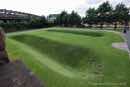
The city began with the civilian settlement which grew up around the Roman fort of Mamucium or Mancunium, established in about 79 AD on a sandstone bluff near the confluence of the rivers Medlock and Irwell.
Throughout the Middle Ages Manchester remained a manorial township, but began to expand around the turn of the 19th century. Manchester's unplanned urbanisation was brought on by a boom in textile manufacture during the Industrial Revolution, achieving city status in 1853.
In the English Civil War, Manchester strongly favoured the Parliamentary interest. Cromwell granted the right for Manchester to to elect its own MP.
Cotton began to be used after about 1600, firstly in linen/cotton fustians, but by around 1750 pure cotton fabrics had overtaken wool in importance.
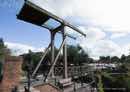
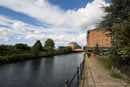
The Irwell and Mersey were made navigable by 1736, opening a route from Manchester to the sea docks on the Mersey. The Bridgewater Canal, Britain's first artificial waterway, was opened in 1761, bringing coal from mines at Worsley to central Manchester. The canal was extended to the Mersey at Runcorn by 1776. Manchester became the dominant marketplace for textiles produced in the surrounding towns. In 1780, Richard Arkwright began construction of Manchester's first cotton mill.
In the early 1800s, John Dalton formulated his atomic theory in Manchester.
Manchester began expanding around the turn of the 19th century, people came to the city for work. It developed a wide range of industries, engineering firms first made machines for the cotton trade, but then diversified into general manufacture. The chemical industry started by producing bleaches and dyes.
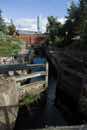
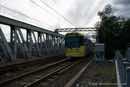
This trade required a large transport and distribution infrastructure, the canal system was extended, Manchester became one end of the world's first intercity passenger railway, the Liverpool and Manchester Railway. Competition between the various forms of transport kept costs down. In 1878 the GPO provided its first telephones to a firm in Manchester. The Manchester Ship Canal was built between 1888 and 1894, in some sections by canalisation of the Rivers Irwell and Mersey, running 36 miles from Salford to Eastham Locks on the tidal Mersey. Oceangoing ships sailed right into the Port of Manchester. On the canal's banks, just outside the borough, the world's first industrial estate was created at Trafford Park. Large quantities of machinery, including cotton processing plant, were exported around the world.
Manchester was mobilised extensively during the Second World War. Engineering works were converted to bomb making, Dunlop's rubber works in Chorlton-on-Medlock made barrage balloons. This made Manchester a target by the Luftwaffe, by late 1940 air raids were taking place against non-military targets. The biggest took place during the Christmas Blitz, on the nights of 22/23 and 24 December 1940, when an estimated 474 tonnes of high explosives plus over 37,000 incendiary bombs were dropped. A large part of the historic city centre was destroyed, including 165 warehouses, 200 business premises, and 150 offices. 376 were killed and 30,000 houses were damaged. Manchester Cathedral, Royal Exchange and Free Trade Hall were among the buildings seriously damaged with the restoration of the cathedral taking 20 years.
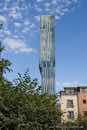
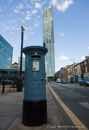
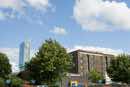
Large city sections from the 1960s have been demolished, re-developed or modernised with the use of glass and steel. Old mills have been converted into apartments. Hulme has undergone extensive regeneration, with million-pound loft-house apartments being developed.
The city began with the civilian settlement which grew up around the Roman fort of Mamucium or Mancunium, established in about 79 AD on a sandstone bluff near the confluence of the rivers Medlock and Irwell.
Throughout the Middle Ages Manchester remained a manorial township, but began to expand around the turn of the 19th century. Manchester's unplanned urbanisation was brought on by a boom in textile manufacture during the Industrial Revolution, achieving city status in 1853.
In the English Civil War, Manchester strongly favoured the Parliamentary interest. Cromwell granted the right for Manchester to to elect its own MP.
Cotton began to be used after about 1600, firstly in linen/cotton fustians, but by around 1750 pure cotton fabrics had overtaken wool in importance.
The Irwell and Mersey were made navigable by 1736, opening a route from Manchester to the sea docks on the Mersey. The Bridgewater Canal, Britain's first artificial waterway, was opened in 1761, bringing coal from mines at Worsley to central Manchester. The canal was extended to the Mersey at Runcorn by 1776. Manchester became the dominant marketplace for textiles produced in the surrounding towns. In 1780, Richard Arkwright began construction of Manchester's first cotton mill.
In the early 1800s, John Dalton formulated his atomic theory in Manchester.
Manchester began expanding around the turn of the 19th century, people came to the city for work. It developed a wide range of industries, engineering firms first made machines for the cotton trade, but then diversified into general manufacture. The chemical industry started by producing bleaches and dyes.
This trade required a large transport and distribution infrastructure, the canal system was extended, Manchester became one end of the world's first intercity passenger railway, the Liverpool and Manchester Railway. Competition between the various forms of transport kept costs down. In 1878 the GPO provided its first telephones to a firm in Manchester. The Manchester Ship Canal was built between 1888 and 1894, in some sections by canalisation of the Rivers Irwell and Mersey, running 36 miles from Salford to Eastham Locks on the tidal Mersey. Oceangoing ships sailed right into the Port of Manchester. On the canal's banks, just outside the borough, the world's first industrial estate was created at Trafford Park. Large quantities of machinery, including cotton processing plant, were exported around the world.
Manchester was mobilised extensively during the Second World War. Engineering works were converted to bomb making, Dunlop's rubber works in Chorlton-on-Medlock made barrage balloons. This made Manchester a target by the Luftwaffe, by late 1940 air raids were taking place against non-military targets. The biggest took place during the Christmas Blitz, on the nights of 22/23 and 24 December 1940, when an estimated 474 tonnes of high explosives plus over 37,000 incendiary bombs were dropped. A large part of the historic city centre was destroyed, including 165 warehouses, 200 business premises, and 150 offices. 376 were killed and 30,000 houses were damaged. Manchester Cathedral, Royal Exchange and Free Trade Hall were among the buildings seriously damaged with the restoration of the cathedral taking 20 years.
Large city sections from the 1960s have been demolished, re-developed or modernised with the use of glass and steel. Old mills have been converted into apartments. Hulme has undergone extensive regeneration, with million-pound loft-house apartments being developed.