From The Neolithic To The Sea: A Journey From The Past To The Present
Apache
Statistics
Category
Crew
Length
Power plant
Performance
Armament
Guns
Missiles
Rockets
Crew
Length
Power plant
Performance
Armament
Guns
Missiles
Rockets
Transport
2
17.7 m
2× Rolls RTM322 turboshaft
293 km/h
M230 Chain Gun, 1200 rounds
Hellfire,Brimstone
CRV7 with Flechette or High-
Explosive Incendiary Semi-
Armour Piercing warheads
2
17.7 m
2× Rolls RTM322 turboshaft
293 km/h
M230 Chain Gun, 1200 rounds
Hellfire,Brimstone
CRV7 with Flechette or High-
Explosive Incendiary Semi-
Armour Piercing warheads
- History
- Gallery
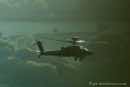
The AH-64D Apache Longbow was designed by Boeing as an attack helicopter for the British Army Air Corps.
The requirement for a new attack helicopter was identified by the British government in the early 1990s. In 1993, invitations to bid were issued. Bids received included the Eurocopter Tiger, a modernised Bell AH-1 SuperCobra, the AH-64 Apache, the Boeing/Sikorsky RAH-66 Comanche, and the Agusta A129 Mangusta.
Both the Tiger and upgraded Cobra variant required more development, and thus risk, while the Apache was combat proven, though its performance in the First Gulf War was criticised by competitors. Westland and the Apache was selected in July 1995, and a contract for 67 helicopters was signed in 1996.
In September 1998, Westland produced the first prototype WAH-64 Apache under licence from Boeing. The first nine Apache AH1s were authorised for service by the director of British Army Aviation on 16 January 2001. The 67th and final Apache was handed over to the British Army in July 2004. The helicopter fleet's cost was around £3.1 billion, with a total acquisition cost of £4.1 billion.
The AgustaWestland Apache is a licence-built version of the Boeing AH-64D Apache Longbow attack helicopter for the British Army Air Corps. The first eight helicopters were built by Boeing with the remaining 59 were assembled by Westland Helicopters (now Leonardo) at Yeovil, Somerset from Boeing-supplied kits.
Changes from the AH-64D include Rolls-Royce Turbomeca RTM322 engines, a new electronic defensive aids suite and a folding blade mechanism allowing the British version to operate from ships. The helicopter was initially designated WAH-64 by Westland Helicopters and was later given the designation Apache AH Mk 1, also written as Apache AH1 by the Ministry of Defence.
The Apache was a valued form of close air support in the conflict in Afghanistan, being deployed to the region in 2006. Naval trials and temporary deployments at sea have proven the aircraft as an able platform to operate from the decks of ships, which is a unique application of the Apache amongst its operators.
British Apaches also served in the NATO 2011 military intervention in Libya operating from Royal Navy ships. The Apache AH1 is to reach its out of service date in 2024 and be replaced by the AH-64E.
The requirement for a new attack helicopter was identified by the British government in the early 1990s. In 1993, invitations to bid were issued. Bids received included the Eurocopter Tiger, a modernised Bell AH-1 SuperCobra, the AH-64 Apache, the Boeing/Sikorsky RAH-66 Comanche, and the Agusta A129 Mangusta.
Both the Tiger and upgraded Cobra variant required more development, and thus risk, while the Apache was combat proven, though its performance in the First Gulf War was criticised by competitors. Westland and the Apache was selected in July 1995, and a contract for 67 helicopters was signed in 1996.
In September 1998, Westland produced the first prototype WAH-64 Apache under licence from Boeing. The first nine Apache AH1s were authorised for service by the director of British Army Aviation on 16 January 2001. The 67th and final Apache was handed over to the British Army in July 2004. The helicopter fleet's cost was around £3.1 billion, with a total acquisition cost of £4.1 billion.
The AgustaWestland Apache is a licence-built version of the Boeing AH-64D Apache Longbow attack helicopter for the British Army Air Corps. The first eight helicopters were built by Boeing with the remaining 59 were assembled by Westland Helicopters (now Leonardo) at Yeovil, Somerset from Boeing-supplied kits.
Changes from the AH-64D include Rolls-Royce Turbomeca RTM322 engines, a new electronic defensive aids suite and a folding blade mechanism allowing the British version to operate from ships. The helicopter was initially designated WAH-64 by Westland Helicopters and was later given the designation Apache AH Mk 1, also written as Apache AH1 by the Ministry of Defence.
The Apache was a valued form of close air support in the conflict in Afghanistan, being deployed to the region in 2006. Naval trials and temporary deployments at sea have proven the aircraft as an able platform to operate from the decks of ships, which is a unique application of the Apache amongst its operators.
British Apaches also served in the NATO 2011 military intervention in Libya operating from Royal Navy ships. The Apache AH1 is to reach its out of service date in 2024 and be replaced by the AH-64E.